He Visited Riyadh and Muscat… Messages in Al-Burhan’s Briefcase
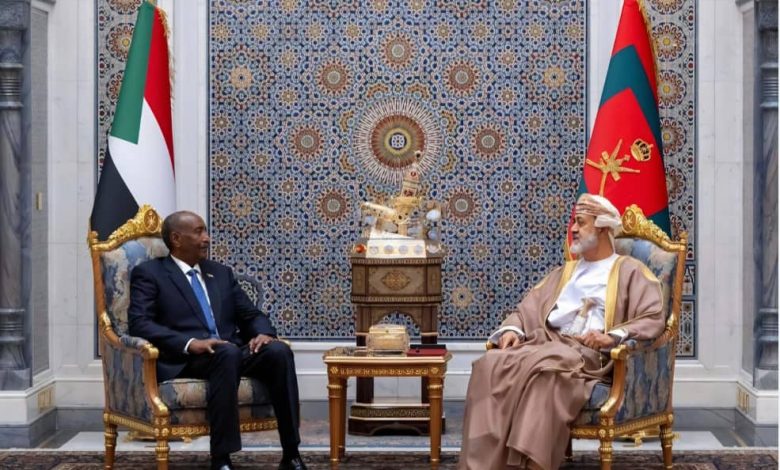
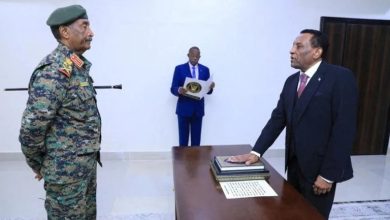
At a time when events are accelerating amid negotiations in Pakistan between the United States and Iran, the aircraft of the Chairman of the Sovereignty Council, General Abdel Fattah Al-Burhan, landed in Riyadh to meet Saudi Crown Prince Mohammed bin Salman, before heading to the Sultanate of Oman. These visits signal Khartoum’s support for Riyadh and Muscat in confronting the major challenges imposed by the region’s wartime conditions.
Despite the severe crises Sudan is enduring due to the ongoing war, Khartoum has remained attentive to regional issues—while naturally focusing on the positions of Riyadh and Muscat regarding the Sudanese question. Riyadh, in particular, has adopted a formula that enjoys broad acceptance within the Sudanese government, which is seeking solutions that accommodate its concerns and keep it away from the “Quadrilateral traps,” where the United Arab Emirates holds significant influence.
The Sudanese government has clearly declared its rejection of the UAE’s involvement in the Sudan file, citing its full support for the Rapid Support Forces militia and its overt engagement in the war. This support, according to Khartoum, has gone beyond merely backing the militia’s arms to direct participation in combat operations—through recruiting mercenaries of various nationalities and deploying officers from its armed forces to Nyala, where some were reportedly killed.
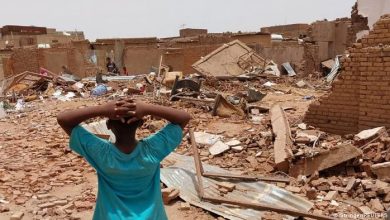
In this context, Riyadh’s balanced position remains important for Sudanese citizens—especially as the war has devastated the economy and people’s livelihoods, sweeping away many of the country’s economic pillars, which now require Saudi support to recover and regain their capacity to sustain the national economy.
Dr. Othman Abubakar Sayed Ahmed, Professor of International Relations and International Law, stated that Al-Burhan’s visit to the region—amid heightened tensions and the possibility of imminent military escalation if negotiations in Pakistan fail, or if Donald Trump does not renew the ceasefire decision—carries great significance. It reflects Sudan’s deep appreciation for these capitals, which have recently faced heavy bombardment and multiple threats.
He added that Al-Burhan’s meeting with Crown Prince Mohammed bin Salman likely addressed developments in Sudan and the Saudi role in supporting the country—a role that has not ceased even during the war. Saudi Arabia has continued to support Sudanese people through the King Salman Humanitarian Aid and Relief Center, which has been among the most effective organizations in reaching those trapped in conflict zones. Many have witnessed aid convoys delivering food supplies to war-affected populations, a sustained effort over the years.
He further noted that Saudi and Qatari humanitarian institutions have played a significant role in alleviating the hardships faced by Sudanese people. Regarding Sudan’s stance on Iranian attacks on Saudi and Qatari facilities, he said it was clear and firm—despite Iran having supported Sudan in its war against the militia. He described the attacks as irresponsible and illogical, stressing that such actions would only alienate Arab public opinion.
He continued: “What is happening now in the Gulf was undoubtedly part of the discussions led by the Chairman of the Sovereignty Council—alongside Sudan’s position on these developments, the trajectory of the war, and the country’s needs at this stage. I believe these issues were addressed during the visit. However, I do not expect detailed statements from Khartoum, Riyadh, or Muscat, given the exceptional nature of the current situation in both the Gulf and Sudan. What is clear is that all parties have realized that chaos in the region could lead to unpredictable consequences.”
Meanwhile, political activist and analyst Mohammed Othman (Firon) pointed out that, despite the importance of the visit, it raises several questions: what messages could not be conveyed except by boarding a plane, taking significant risks, and traveling to Riyadh and Oman? He noted that these are high-risk destinations in a tense region where conflict could erupt at any moment.
He added: “Despite everything, Al-Burhan took on the risks, traveled to the region, and met its leaders. He did not stop in Riyadh but continued to Oman. I believe this constitutes a strong message of support and solidarity—if that was indeed his intention—and it is likely to have implications in the coming phase once a response is received.”