Opinion
The Rebellion’s Test… and the Government
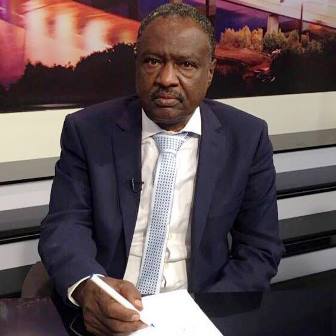
Rashed Abdul Raheem
The exams currently taking place in Sudan and abroad serve as a test for both the rebellion and the government.
Air Force planes roamed the skies to secure exam centers, while police forces were deployed on the ground to guard them.
President Al-Burhan visited the exam centers to ensure their smooth conduct. Ambassadors were present at centers abroad, closely monitoring the process.
The entire Sudanese state was focused on providing the necessary security and stability to allow students to continue their education.
Meanwhile, as the government worked to ensure the exams’ success, the rebel forces sought to disrupt them. They closed exam centers, threatened students and teachers, and pressured allied countries to prevent exams from being held on their soil.
While the government builds, the Rapid Support Forces (RSF) destroy.
In battles, the Janjaweed used schools as weapons storage sites in residential areas.
Before targeting the education sector, the rebellion destroyed over 250 hospitals across Sudan, killing dozens of doctors and medical staff, looting medicines worth 600 million Sudanese pounds, and sabotaging medical equipment and devices. They then moved the equipment to Darfur, where there is a lack of trained personnel to operate them.
The destruction caused by the Janjaweed has also affected telecommunications, water facilities, and bridges.
This contrast demonstrates the Sudanese government’s model of building and development versus the rebellion’s model of destruction and looting.
Despite this appalling reality, a faction seeks to establish a government in areas under RSF control—areas where the rebels have failed to establish effective governance or create a functioning civil administration.
Across Sudan, the rebellion has failed to appoint functioning governing officials, except in Khartoum State, where they appointed a governor unsuitable even to guard the governor’s office.
This faction, under the guise of “Tagaddam” (Progress), aims to establish a government shielded by the oppressive RSF rifles and led by figures who are desperate to regain the power they lost—positions in sovereign councils and ministries they could not sustain.
Sudan’s exams are not just a test for students but also a test for Tagaddam, the RSF, and the Sudanese government. From day one, it has become clear who is truly capable of governing and preserving Sudan.