Decline in Sudan’s Exports and Imports: War and Wrong Policies
Report by: Rehab Abdullah
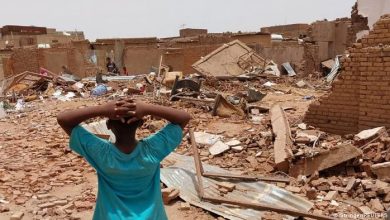
The war that broke out in Sudan between the Rapid Support Forces (RSF) and the Sudanese army in mid-April 2023 has caused a significant shock to the economy across all sectors, leaving devastating impacts. Experts estimate the losses at around $200 billion since the war began.
All economic indicators have been affected, with inflation rates rising, the exchange rate of foreign currencies dropping to 2,660 Sudanese pounds, and economic growth rates declining. Government revenues have decreased by 85%.
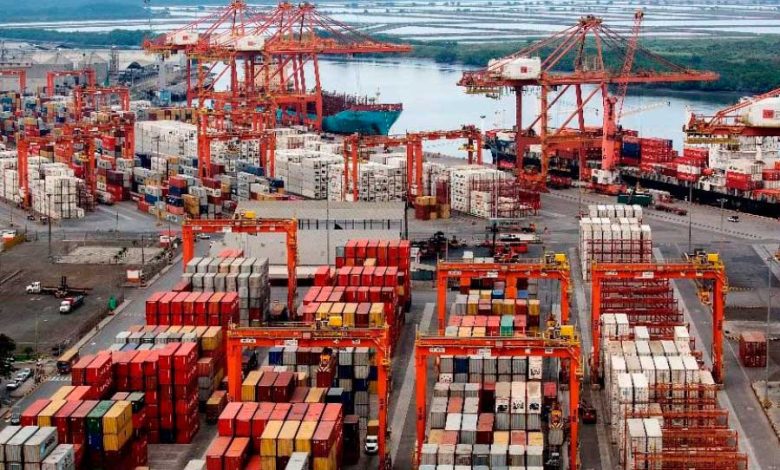
Exports and imports have not been immune to the effects of the war. Exports have dropped significantly due to the war’s impact on export outlets. Trade in goods and services between Sudan and the United Kingdom decreased by 44.8% until the end of the first quarter of 2024.
Former Minister of Trade, Fatih Abdullah Yusuf, stated that the trade balance deficit in the first quarter of this year reached $4.8 billion. He added that “exports in the first quarter of 2024 amounted to $3.8 billion, while imports reached $8.6 billion.”
Reducing Imports
Economist Mohamed Adam Abu Al-Bashar emphasized the impact of the war on the export sector, noting that the war led to a decline in the quality and quantity of exported goods due to a shortage of raw materials and reduced production capacity, especially for manufactured goods.
In an analysis paper presented at the Economic Forum in Port Sudan, Al-Bashar stated that this led to a decline in exports of gum arabic, meat, peanuts, and sesame, which lost their competitiveness in global markets in the long term due to a lack of supply from local suppliers and their shift to competing countries. The transportation infrastructure, especially key roads and airports (Khartoum airport), was also affected, hindering the flow of exports, particularly meat to the Gulf countries and gold exports, which were less affected than other exports due to the fact that production was not directly impacted by the war as it is located in safer states.
There was also an increase in smuggling goods into neighboring countries. Despite the potential positive effect that the devaluation of the currency and the export sector could have, as lower local prices make goods attractive in global markets, this did not happen due to the deterioration of domestic infrastructure and the disruption of supply chains to local markets.
Decline in Imports
Al-Bashar also pointed out that the war affected the reduction of imports of essential goods such as fuel, foodstuffs, and medicines due to import restrictions, particularly in the early months of the war. However, the situation has changed, and the government has identified 10 essential goods and facilitated the import procedures for wheat, sugar, lentils, rice, foodstuffs, powdered milk, sauce, medicines, pharmaceuticals, and fuel.
The war also led to increased shipping and insurance costs due to the risks involved, resulting in a significant rise in the cost of imports, which in turn affected the prices of imported goods. The devaluation of the Sudanese pound further increased import costs, leading to inflation. Additionally, citizens turned to invest their money in foreign currencies, particularly dollars, out of fear of losing their savings, which led to the entry of many speculators into the market.
Exports Declined by 60%
Economic analyst Haitham Mohamed Fathi mentioned in an interview with Al-Ahdath that Sudan’s exports declined by about 60% due to the closure of Khartoum airport, the halting of operations at most dry ports, and disruptions in supply chains resulting from the war, which led to a decrease in foreign currency earnings from exports.
Policies that Harm Exports and Imports
Despite the acknowledgment by the former Treasurer of the National Chamber of Importers in the Federation of Chambers of Commerce, Hashem Fadil, of the war’s impact on exports and imports, he criticized the government policies that he believed exacerbated the problem, citing the continuous increase in the customs dollar price, which reached 2,000 pounds.
For his part, former Treasurer of the Federation of Chambers of Commerce and member of the Emergency Committee for Importers and Exporters in the Red Sea, Ibrahim Abu Bakr Al-Siddiq, revealed that most exporters had exited the market due to the war and the rigidity of the Central Bank of Sudan. He noted that the actual number of companies involved in import and export does not exceed 2,000 companies, and that the Central Bank had banned 80% of exporters. The chamber is working to implement a unified network for import payments and change certificates of origin to integrated ones to combat fraud, along with adding codes and electronic signatures.
He further revealed that the chamber had discussed these obstacles with the Minister of Finance, Dr. Jibril Ibrahim, and mentioned the halt of money transfers by Saudi Arabia due to the security situation, with most livestock traders’ funds being frozen in Saudi banks.
Banking expert Dr. Omar Mahgoub confirmed in an interview with Al-Ahdath that this war has caused immense losses to the Sudanese economy, which has been suffering from continuous decline since 2006. Exports were one of the sectors hit by the war, as factory shutdowns due to destruction directly impacted the volume of industrial exports. He stated, “I believe there are currently no exports from industrial production.”
He also highlighted the impact on the agricultural production sector due to the war, especially in important production areas that were looted, while transportation and logistics were disrupted, affecting exports of sesame, peanuts, oils, gum, onions, and animal feed. The livestock production sector, both live and slaughtered, was also affected, as well as the mining sector, including oil, where ten production fields were lost.
Regarding imports, Dr. Mahgoub noted severe impacts, particularly on raw material imports due to factory shutdowns and the devaluation of the pound. The government’s restriction on the import of specific goods also had an effect, along with traders’ concerns about inflation and the declining income levels due to the war, as many lost their jobs. Furthermore, available funds were allocated to other expenses due to displacement, and the transport sector was also affected by the war in terms of risks, maintenance issues, and the availability of spare parts.
Solutions and Remedies
Dr. Omar Mahgoub believes that the problems of exports and imports will not be solved unless the war stops, at least in the production areas and transportation hubs. He added that the current problems are inseparable from the pre-war reality of the Sudanese economy, which requires strategic plans to maximize industrial and agricultural production, fight smuggling, and make the most of gold production, thus increasing GDP and halting the devaluation of the pound.
Mohamed Adam Al-Bashar pointed to potential solutions to mitigate the effects of the war on the trade sector. These include improving infrastructure, securing transportation routes, especially ports, to facilitate the movement of goods, developing local production, encouraging investment in food security and industries, launching economic initiatives to stimulate production, strengthening trade cooperation with neighboring countries, restoring international confidence, stimulating expatriate investments, and reducing dependency on a single resource (gold).