Security in Khartoum… A Concern for Returnees
Report – Sudan Events
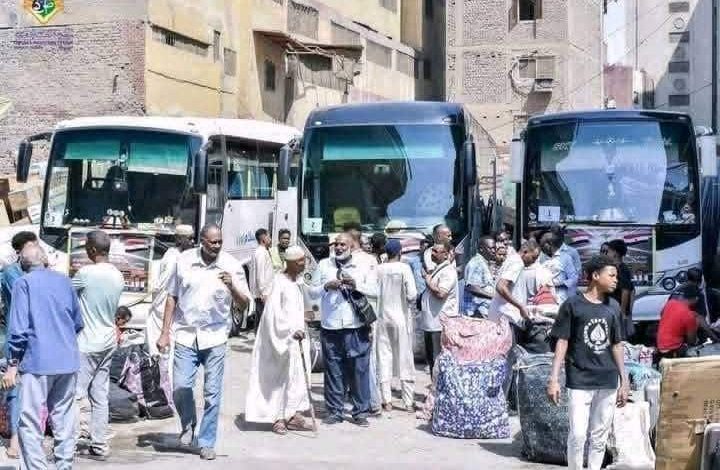
As large numbers of returnees arrive in Khartoum from Egypt, Gulf countries, and various Sudanese states, certain media platforms have begun highlighting what they describe as major security challenges that could turn the return of refugees and internally displaced persons into an unbearable ordeal. These narratives focus on isolated incidents, portraying the capital as broadly unsafe.
Among the frequently cited cases is the stabbing of an officer from one of the regular forces by a group of assailants attempting to steal his mobile phone. However, such accounts often omit that police arrested the perpetrators within hours, promptly opening a case and launching an investigation that quickly led to their capture. A similar response occurred in the case of a young woman who was robbed at gunpoint in the Al-Thawra district, where the suspects were apprehended within minutes after being surrounded and exchanging fire with security forces.
There are indeed challenges related to the proliferation of weapons—this is an undeniable reality. Firearms remain scattered, and some individuals have been found wearing official uniforms of regular forces while impersonating police or military personnel. This phenomenon stems in part from militia control over numerous camps and offices previously belonging to state forces, where uniforms were looted and later used to obscure identities during acts of looting. These items eventually made their way into the hands of criminal groups—often individuals who had previously fought or looted alongside militias during their presence in the city.
However, it would be inaccurate to assume that all offenders are impostors. Police records indicate that some suspects are in fact affiliated with regular forces—many of them retired personnel, while others are still in active service. Exploiting the climate of disorder, some have engaged in theft and robbery as part of organized gangs that re-emerged after the liberation of Khartoum. These groups have intensified their activities, frequently using motorcycles to carry out snatch-and-run operations, intimidation, and street robberies.
This phenomenon is not entirely new. Even before the war, gangs locally known as “Nine Long” had imposed their presence on the streets, spreading fear among residents. With the outbreak of conflict, many of these groups joined militia forces, participating in widespread looting across Khartoum. They established markets for stolen goods—dubbed “Dagalo Markets”—where looted household items were openly sold in various parts of the capital.
At the height of the crisis, these groups escalated their actions to raiding homes under threat of arms, targeting houses abandoned by their owners. In some cases, they used large transport vehicles to remove entire household contents and electrical appliances in broad daylight. Often dressed in official uniforms and driving vehicles associated with government forces, they operated with unusual boldness, intimidating any remaining residents.
However, according to observers, this situation has changed significantly following measures taken by state authorities and the committee led by Ibrahim Jaber. The ban on motorcycles, stricter enforcement against indiscriminate gunfire, and the deployment of joint forces have all contributed to curbing these activities. Security personnel now stop individuals wearing official uniforms, question them, and confiscate weapons—especially after a decision to prohibit carrying arms following the evacuation of combat groups from the capital.
Magdi Dou Al-Bait, a trader on Al-Wadi Street in Al-Thawra, says the current situation is not comparable to the period immediately after Khartoum’s liberation. “At that time, we lived through extremely difficult conditions, with robberies taking place openly in broad daylight,” he explains. “But with the deployment of police and joint force campaigns, the situation has improved significantly.”
He adds that security in Khartoum today is arguably better than it was even before the war. “Before the conflict, these gangs used to stop cars in the street, assault people, and rob them without consequence. They continued doing so even after liberation—but they can no longer operate the same way now. The police are dealing with the situation firmly, and these groups know that joint forces are present and effective.”
According to Dou Al-Bait, the improved security is largely due to proactive measures, including raids on criminal hideouts and the removal of informal settlements that had provided cover for such activities. “The security situation in Khartoum is excellent,” he says. “We are not facing the kinds of problems we experienced before. Police stations are functioning, prosecution offices are operating, and courts have resumed their work. From what I see, no one in Khartoum today is complaining about the security challenges we once faced.”
He acknowledges that challenges remain in services and other sectors, and that some areas still require a greater security presence. “There are isolated incidents in certain neighborhoods that need more forces deployed,” he notes. “But overall, in terms of security, Khartoum is now in a better position—even compared to the pre-war period.”