The New York Times: Any Serious Effort to End the Bloodshed in Sudan Must Begin with the UAE
Sudan Events – Agencies
A recent article in The New York Times argues that any attempt to stop the massacres being carried out by the Rapid Support Forces (RSF) in Sudan must begin with the United Arab Emirates.
According to the piece, co-authored by three prominent figures, the ongoing slaughter can be halted if those with real influence exert pressure on the UAE—the main backer of the RSF’s war machine. Among those who can act are U.S. leaders such as former President Donald Trump and Senator Marco Rubio, as well as major corporations like the National Basketball Association (NBA) and Disney, both of which have business partnerships with the Emirates.
Sudanese journalist Muammar Ibrahim stayed behind to document atrocities while thousands fled the genocidal bloodbath in El Fasher, the capital of North Darfur. He was abducted and remains in detention. Meanwhile, Mohamed El-Mekki, a beloved engineering professor known for his service to the community, sent his family to safety but stayed in El Fasher to care for his elderly grandfather. When he tried to escape RSF gunmen, his brother said, he was captured in a nearby town and executed.
These are just two of hundreds of stories of people risking—and often losing—their lives to help others survive amid the rapidly escalating violence in Sudan. Two and a half years after fighting broke out between the Sudanese Armed Forces (SAF) and the paramilitary RSF, as many as 400,000 people are believed to have been killed—by bombing, shooting, or starvation.
Now, the war’s most catastrophic phase appears to be unfolding in El Fasher, which, in the words of UN humanitarian coordinator Tom Fletcher, “has descended into an even darker hell.”
Mass Executions
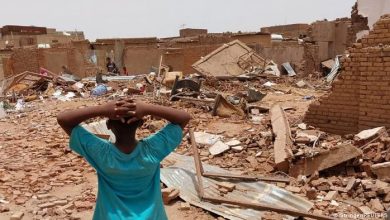
After the militia seized El Fasher from the Sudanese army last week, it immediately began carrying out mass executions: slaughtering hundreds in the last functioning hospital, burning people alive, forcing men to dig their own graves before burying them alive, going house to house shooting residents, and executing disabled people unable to flee.
The horror stories come from surviving eyewitnesses, relief organizations, satellite imagery, and even the fighters themselves—who record their atrocities and post the videos online. Much of the documentation has been done by Yale’s Humanitarian Research Lab, which analyzes open-source satellite images and other data to provide real-time assessments.
Evidence indicates that the militia has killed and sexually assaulted civilians on an unimaginable scale in less than a week. Its fighters continue targeting indigenous African communities, as they have since the war began. Human Rights Watch, citing a UN commission, reported that in 2023 the militia targeted civilians from the Masalit ethnic group in El Geneina, West Darfur, killing between 10,000 and 15,000 people.
This massacre can be stopped if those with influence put pressure on the UAE, the main sponsor of the RSF’s war apparatus. That includes U.S. leaders like Trump and Rubio, and major corporations like the NBA and Disney, both of which maintain business ties with Abu Dhabi.
Steps That Could Save Hundreds of Thousands
While countless Sudanese are doing everything they can to save even a single person, global powers have yet to take steps that could save hundreds of thousands. The genocidal campaign has encircled vast numbers of civilians trapped in the region, threatening to expand one of the century’s largest mass killings.
Any serious effort to end the bloodshed in Sudan must begin with the United Arab Emirates. Multiple credible sources—including human rights organizations, news agencies, an RSF intelligence officer, and U.S. lawmakers—have confirmed that the UAE is the principal supplier of weapons to the paramilitary forces. Investigations have traced repeated arms shipments and drone transfers to Emirati networks.
But the UAE’s role goes beyond arming the militia. When fighting erupted in April 2023, the Emirates reportedly established logistical routes through Chad, Libya, the Central African Republic, South Sudan, and Uganda to supply the RSF with weapons, fuel, and possibly fighters. The UAE is not a distant patron; it is the operational hub of a regional war economy vital to the RSF’s survival.
Gold, the Red Sea, and Undermining Democracy
Experts say the UAE’s objectives in supporting the militia include securing access to Sudan’s gold and Red Sea coastline while undermining democratic influence in Khartoum.
The Trump administration has taken no significant steps to rein in the UAE—it has not even appointed a special envoy for Sudan. Peace talks brokered with Saudi Arabia, Egypt, and the UAE have done little to improve the situation on the ground as massacres continue.
Yet the U.S. government wields significant leverage, particularly in the security sphere. Washington sells billions of dollars in weapons to the UAE and has designated it a “Major Security Partner.” The administration should suspend all arms sales until the UAE ceases its support for the RSF. Bills introduced in both the House and Senate aim to do exactly that, and Congress should pass them.
The U.S. must also sharply increase financial pressure on the RSF by targeting its gold smuggling and arms procurement networks and by rigorously enforcing existing sanctions.
True, Trump’s financial ties to the UAE—especially through a sovereign wealth-backed investment firm that poured $2 billion into a cryptocurrency venture partly owned by his family—may hinder his willingness to apply pressure. But his ambitions for a Nobel Peace Prize could motivate him to use his personal relationships to help end the violence.
In its bid for global stature, the UAE has made itself vulnerable to other forms of pressure. It has built a reputation as a global hub for sports and entertainment, crafting an image that conceals domestic repression—and now, complicity in genocide abroad. The Emirates depend on corporations, organizations, teams, and artists to project the image it wants the world to see.
What Role for the NBA?
Few institutions wield as much influence as the National Basketball Association. The NBA’s partnership with the UAE includes preseason games in Abu Dhabi and an in-season tournament—the NBA Abu Dhabi Cup—which began last Friday. The league should make clear that this will be the last such event unless the UAE halts its support for armed groups. The NBA’s global stature gives it immense leverage; taking a principled stand could send a signal far beyond the basketball court and set a precedent for others to follow.
Disney, one of the world’s most powerful entertainment companies, is planning to build a theme park in Abu Dhabi. It, too, could use its voice to push for change.
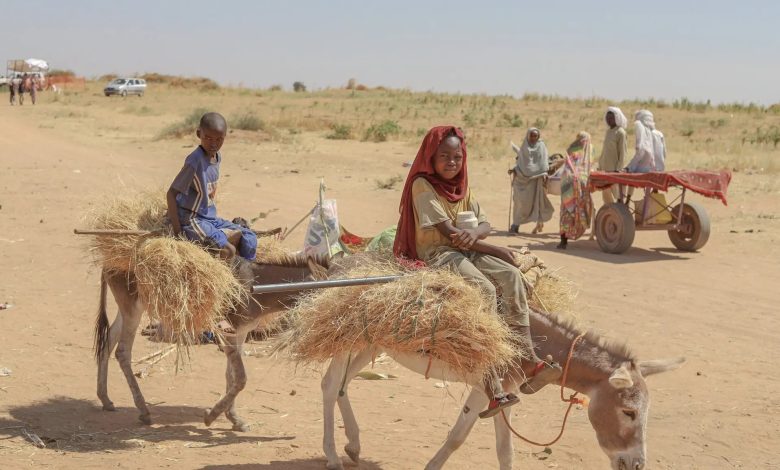
The lives of countless civilians now hiding in fear—and of hundreds of thousands displaced to nearby towns, including 650,000 in Tawila southwest of El Fasher—hang in the balance.
Sudan’s future is also at stake. If the RSF consolidates power, the world will have allowed a genocidal militia to seize and hold territory with impunity. Sudan’s collapse would destabilize the entire Horn of Africa, send refugees across the Sahel toward Europe, and embolden other paramilitary movements.
As Elie Wiesel once said: “Neutrality helps the oppressor, never the victim. Silence encourages the tormentor, never the tormented.” For institutions tied to the UAE, action may carry an economic cost. But the cost of silence—and of business as usual—is far greater. That cost will be measured in lives, in more Muhammads and more Muammars. Standing firmly with the people of Sudan is the only way forward.
Authors:
Eric A. Friedman – Grandson of Holocaust survivors and global health justice scholar at Georgetown University’s O’Neill Institute for National and Global Health Law.
Suad Abdelaziz – Sudanese-American human rights lawyer and founder of Decolonize Sudan, an organization advocating for human rights.
John Prendergast – Founder of The Sentry, which investigates war crimes and those who profit from them.